
Published on
Interview with SKR about the wasteland
Where the idea for the game Yo soy Páramo came from and what the video game promises.
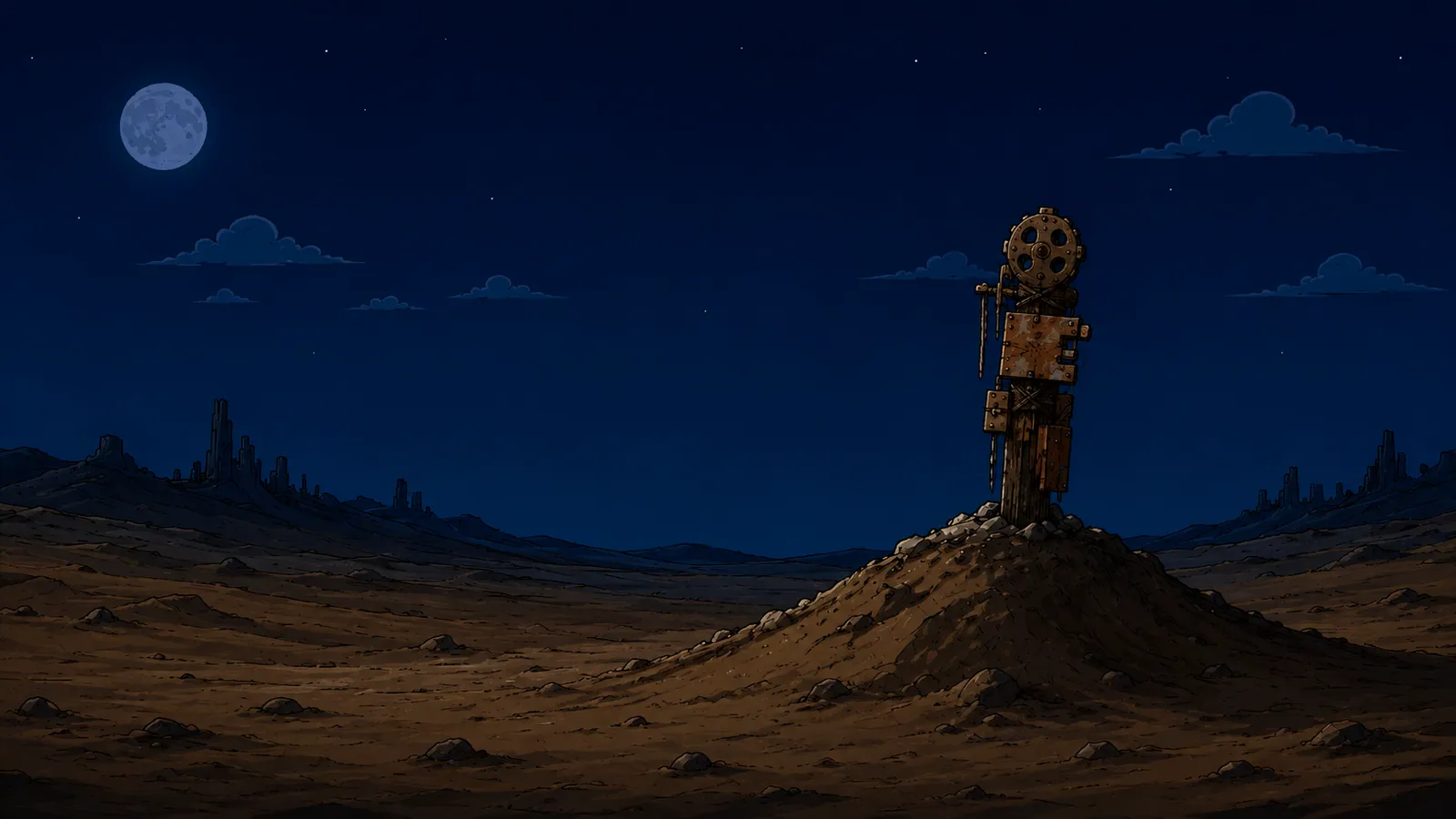
The world is ending, humanity stands on the brink of extinction. If you want to see the end of the world, you’ll have to survive a little longer.
What image or feeling best sums up the experience of playing it?
I’m trying to offer a humanist view of society. In the end, it’s a group of people who happen to be living through the end of everything. They don’t understand why, or what happened to bring it all to an end. They can’t imagine what society was like or how far technology had advanced before the world became an unlivable wasteland.
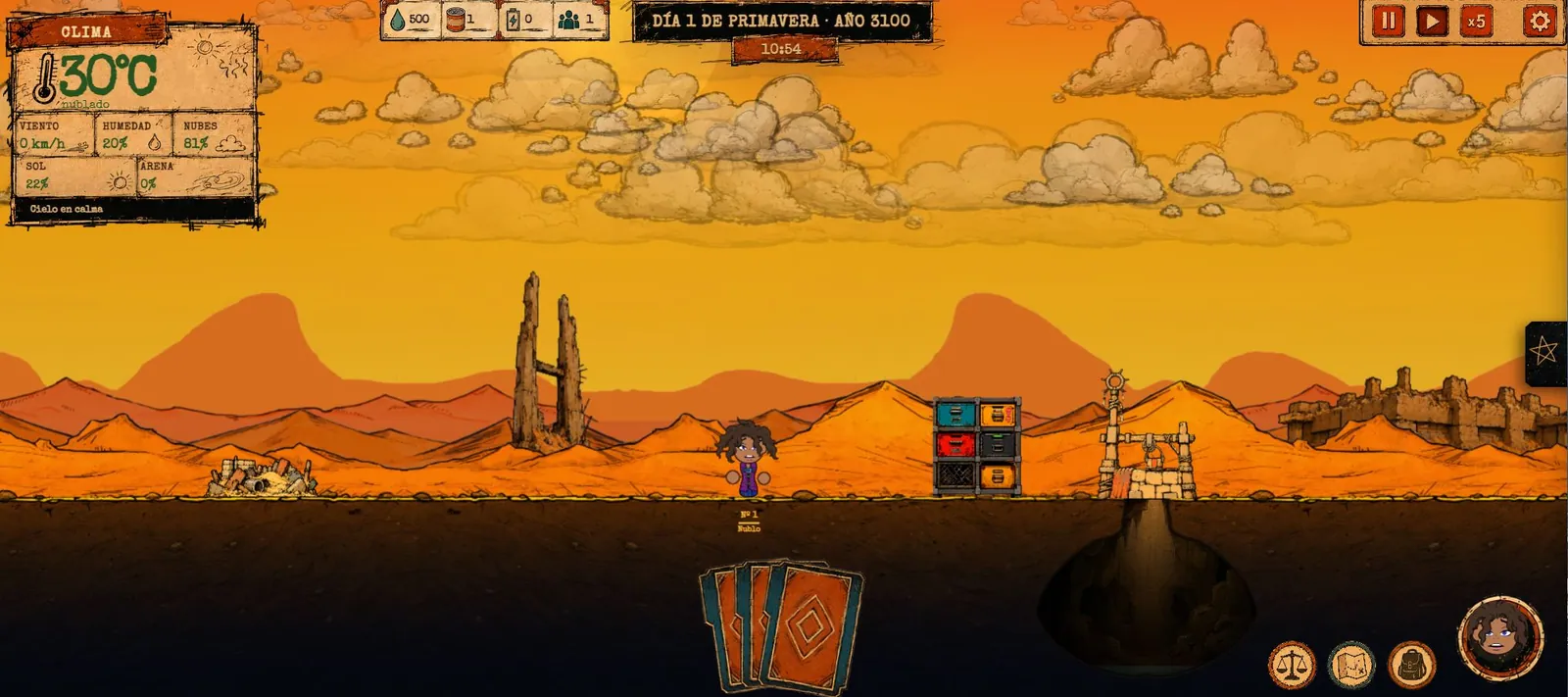
With that historical weight, that thwarted responsibility, that tone, the player arrives and establishes what will become humanity’s last settlement on Earth. They’ll have to make difficult decisions, find strategies and learn the hard way, gain experience as a player, get to know the world to figure out how to face it. That’s the game: survival and strategy pushed to the limit.
What promise does the game make to the player in its first few minutes?
Discovery. It’s a game you have to learn, not through a long tutorial, but by getting further each time, stocking up, and planning your runs. But something new will always come along, a challenge you’ll have to overcome if you want to last a little longer.
What does Yo soy Páramo offer that you wouldn’t find in the same way in another survival game?
The world is ending, things are getting worse, it’s the end of everything. I’m trying to convey that idea: it’s present in people’s philosophies, it’s always there. You start in a hostile world of extreme temperatures, but things will get worse, and in the end, you will die, one way or another. How long can you survive?
What would you like someone to say after finishing their first run?
That it was a new experience. More than «I had fun» or «it surprised me», that would be the most satisfying answer for me.
What was the first idea, before its current systems existed?
It came from a song, lyrics I wrote that depicted a world like this, an immense wasteland at the end of everything. I’d been carrying it around for many years, imagining its details in my head. I even tried to make it into a game before, but it never became more than a side project in my life, without the time it takes to devote yourself to developing a video game.
But I made it happen. I managed to make time for it, to dedicate myself to this completely, and that’s why it’s seen the light of day. A lot has happened since that first song.
Was there a moment when you thought, «this is the game I want to make»?
I’m always working on a game or a smaller project, trying things out, developing ideas. They’re all sitting unfinished in my digital warehouse; the poor things only get the odd bit of free time, never enough to take off, but they help me keep up with new technologies and ways of developing.
The latest advances in artificial intelligence opened up a huge boost for building ideas, so the time had come. Given where we were, the development time involved, and those hours I’d suddenly pulled out of thin air to truly dedicate myself to the studio, the moment arrived —a glorious one, by the way— to choose from my arsenal. And the wasteland was the one I chose. I’ve been faithful to it ever since.
What part of you is most present in the game?
The game is a personal reflection: I created everything obsessively, every detail, every philosophy. The lyrics on songs you can find on old vinyl records in some lost camp tell stories that are sometimes entirely about the wasteland and its lore, but there are personal lyrics too that fit into this story.
It’s the obsession I carry as a player: playing and seeing that every character is unique in their own way, that there are endless items to find, that the game always surprises you with new challenges, and that violence isn’t always the basic mechanic. Here, the environment is alive. You’re not the protagonist of the world: the world carries on, and you’re the one who has to catch up.
This is the end of everything, the consequences of an unrestrained humanity. So fascinating, and yet so desolate. The game is a complete personal work.
What decision have you stood by even though it was harder to develop or explain?
Developing with agents. That really was a challenge, but I bet everything on making it work. I’ve learned a lot and found the right approach; I had to add very clear directives telling them not to take part in the creative development.
Programming has changed completely: now you write in human language. You can define details from a creative perspective using words people understand, not code, which let me delegate the work that had always stolen precious time from me and focus on my author’s vision. But of course, agentic AI is still in its early stages, and I’ve had to evolve alongside it.